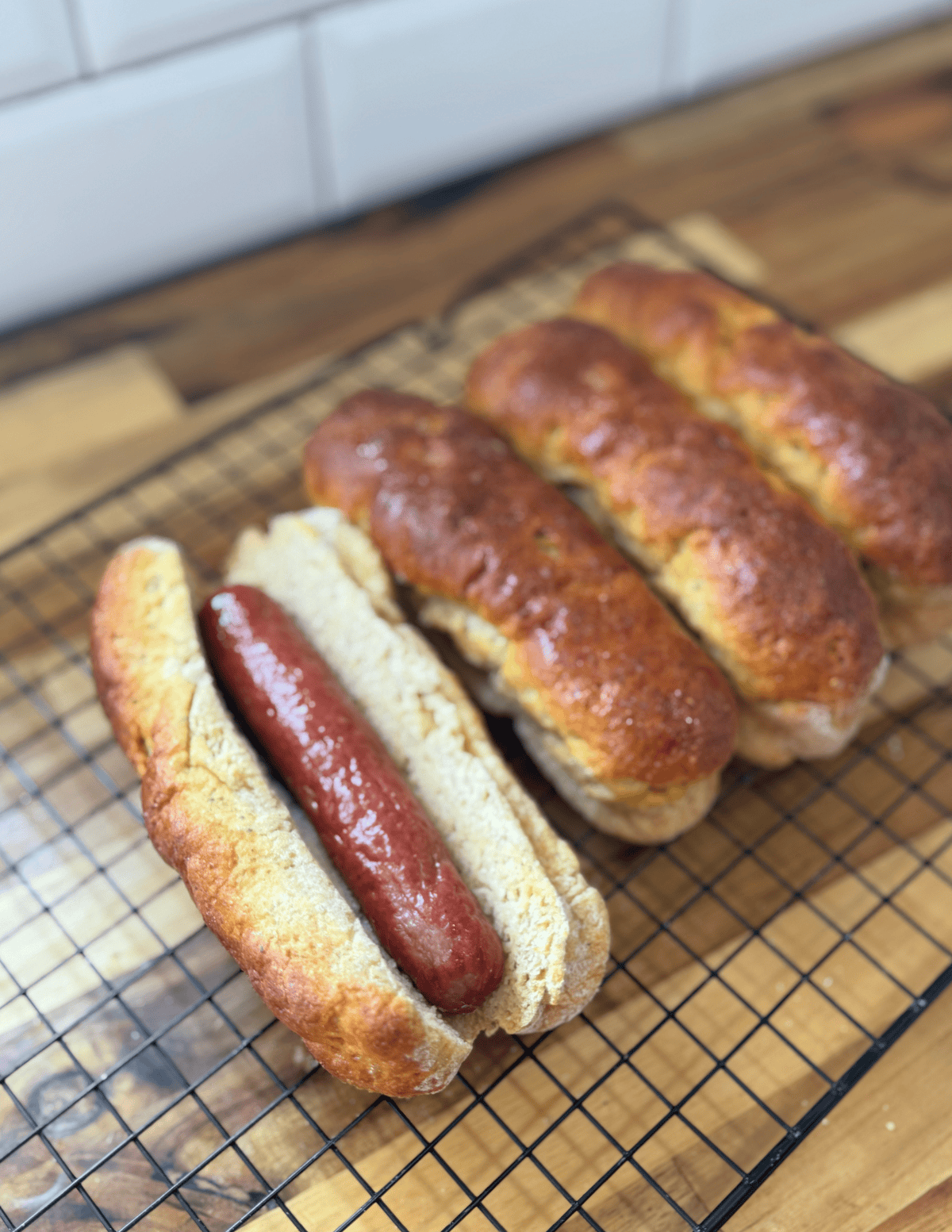
These fresh milled gluten free hot dog buns are soft, fluffy, and actually flexible—no crumbling, no dryness, and no weird aftertaste. If you’ve ever tried store-bought gluten-free buns that fall apart the second you bite into them, this recipe fixes that with a dough designed to hold structure while still staying light and tender.
Using fresh milled flour adds real flavor and better texture, making these buns feel closer to traditional bakery-style bread. They’re sturdy enough to hold a loaded hot dog but soft enough to bite into without breaking apart. If you’ve made my sandwich bread or hamburger buns, you already know that this is the hot dog version you’ve been missing.
This post may contain affiliate links, please read our disclosure policy for details.
Why You’ll Love This Hot Dog Buns
Soft, fluffy texture (not dry or crumbly)
Flexible and holds together when sliced
Made with fresh milled, real ingredients
Gluten free but you’d never know it by how it tastes
Perfect for hot dogs, brats, or sandwiches
Freezer-friendly for batch baking
Ingredients
1. Psyllium Husk Mix
This is a mix of psyllium husk (whole husk) and warm water. When combining the two together, a gel mixture is formed that helps create the structure of the dough. It is importance to use a trusted brand of psyllium husk (I recommend this one). It’s also extremely important to get whole husk. Powdered husk is finer and requires more water to compensate for the excess surface area on the powder compared to the whole husk.
Watch how to make psyllium husk gel for yeast breads with whole husk here:
2. Bloomed Yeast
By combining the yeast, warm milk (or water if dairy-free) and honey together and allowing it time to proof in a warm, draft free area, a frothy “bloomed” yeast emerges which reassures you that your yeast is active and will help your dough rise beautifully. I recommend using a countertop proofing oven to ensure a warm and compatible environment for proofing not only the yeast but the dough as well. My favorite is this multipurpose oven.
Here’s a tutorial on how to bloom the yeast:
3. Flours
This recipe calls for a mixture of flours which may seem overwhelming, but once you get over the fact that good gluten free foods require more than one flour, you see just how simple this mix is! Not only is it simple, but it comes with versatility between fresh milling the millet and sorghum flour, or using already milled versions of those flours. There is a mix of millet, sorghum, arrowroot powder. If additional allergens or dietary preferences don’t support those flours, this recipe is very easy to substitute out for flours of your choice. Note: If you make this with 100% one to one flour, the flavor profile will be different.
4. Honey
Many times you’ll see that yeast is proofed with refined sugar within recipes. Well, not here! Honey (or even maple syrup) is a great natural sweetener that feeds the yeast and allows it to proof. I recommend a local sourced honey.
5. Xanthan Gum
Xanthan Gum is another structure forming ingredient that is necessary within gluten-free baking. Like psyllium husk, not all xanthan gum is created equally. Many are inflammatory and derived from corn, but I’ve found a corn free brand that works great and is a healthier solution to the xanthin gum needs within gluten free baking. This one is my favorite.
6. Salt
A small amount of salt balances the sweetness and enhances the chocolate flavor. Don’t skip it—it makes a noticeable difference.
7. Eggs
I’m a big fan of supporting local farmers and using farm fresh eggs. It’s also important if you’re navigating more anti-inflammatory foods to source pasture raised, non GMO, corn and soy free eggs. If you need to be egg free, my favorite egg replacer isBob’s Red Mill Egg Replacer. I’ve used it within this recipe and it came out amazing!
9. Baking Powder
Baking powder gives the dough just enough lift. I recommend using a corn-free and aluminum-free baking powder, which is easier on digestion and keeps the flavor clean. This is my go-to option for all gluten-free baking.
Additional Allergens/Suggested Modifications
- Dairy: Use a dairy-free butter to spread on the outside of the baked loaf to soften the crust.
- Egg: Use an egg replacer (I suggest Bob Red Mills)
This recipe is naturally free of: nuts, fish, crustacean shellfish, tree nuts, peanuts, wheat, soybeans, seed oils, and sesame.
“These hot dog buns are some of the best tasting gluten free buns I’ve ever had! Our family loves them so much!”
How to Finally Make Really Good GF Hot Dog Buns
Please see recipe card at the bottom of this post for the full recipe details.
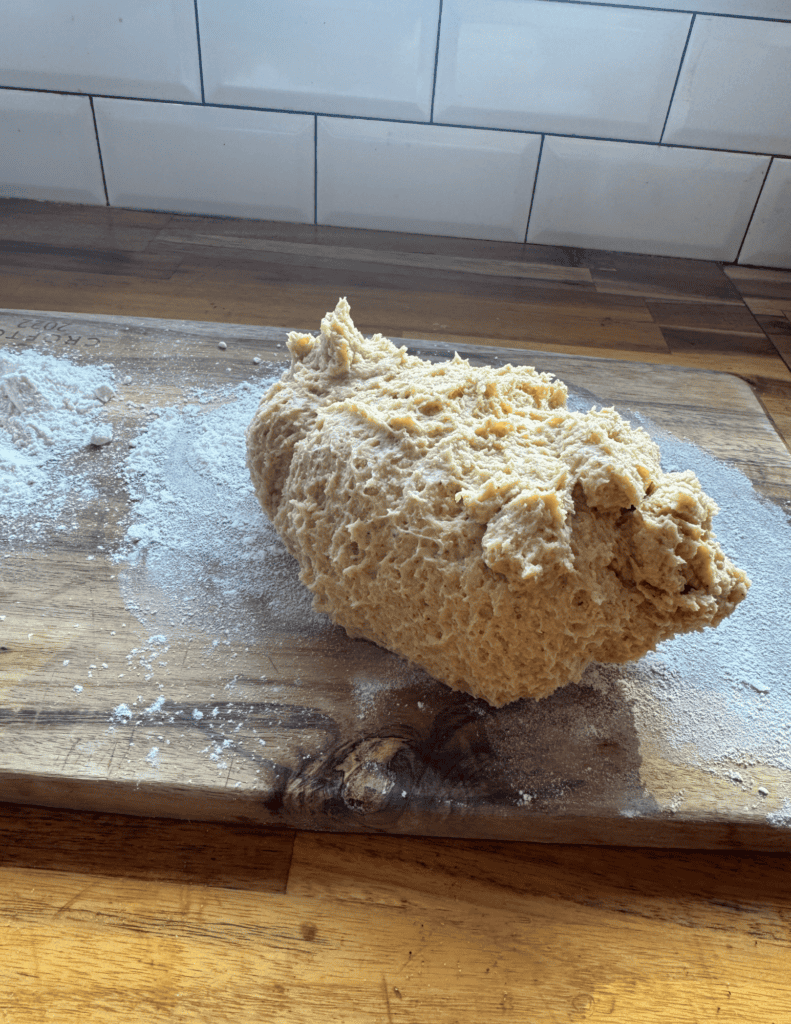
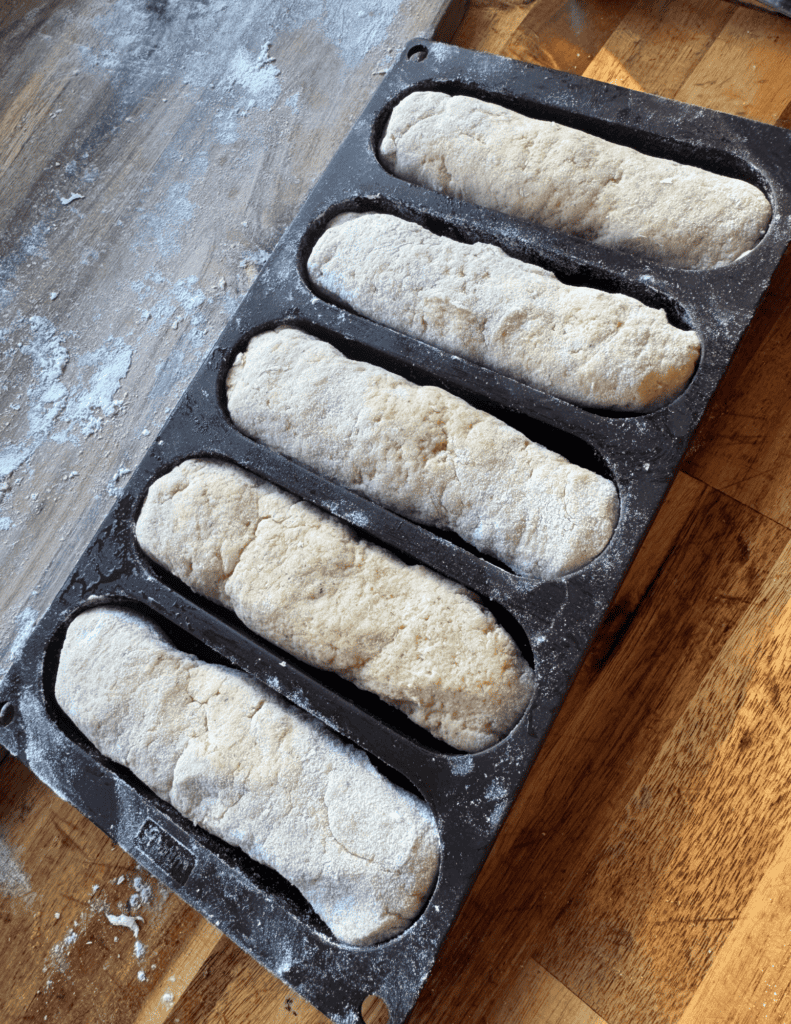
1. Dough texture is fluffy and a little sticky to the touch. Lighly flour the surface to work with the dough.
2. Break dough into smaller portions and roll into a hot dog shape. Use a mold to help the dough keep its shape. I prefer this one.
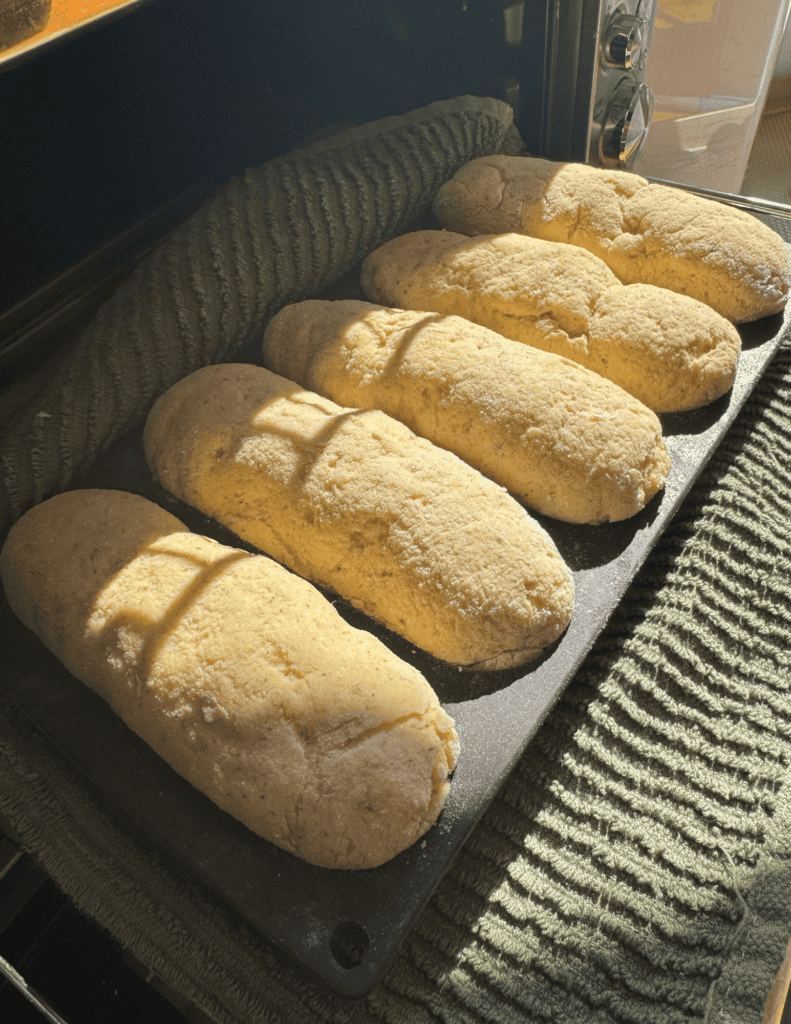
3. Proof the dough.
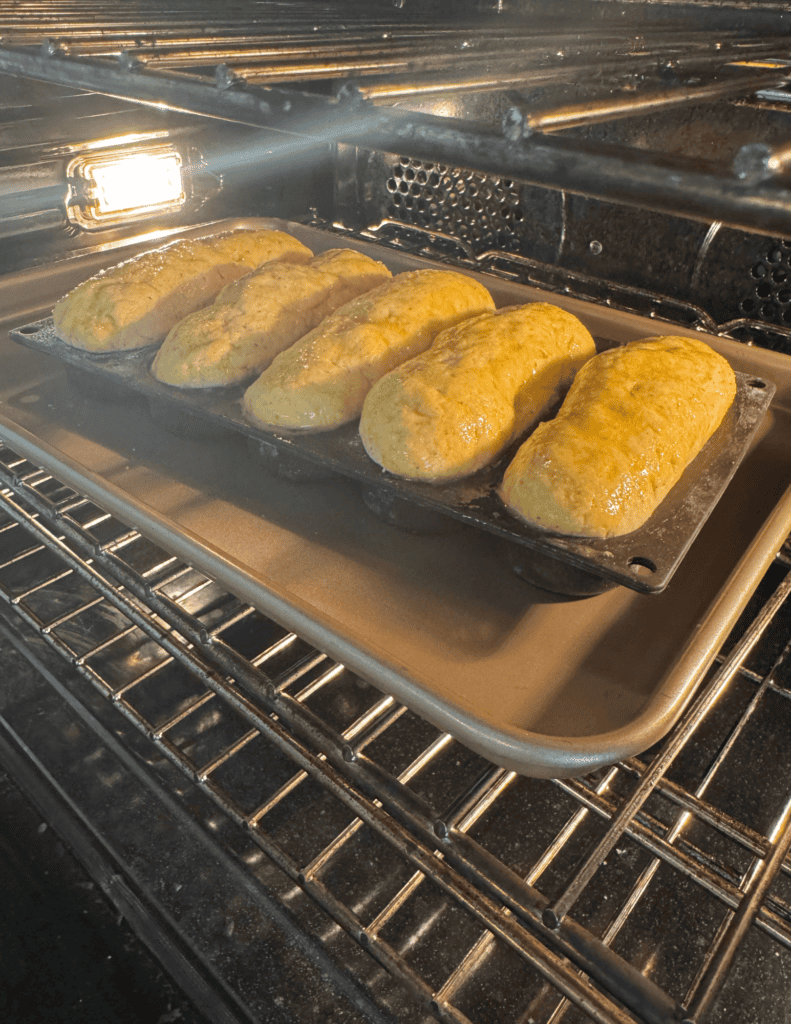
4. Paint on egg wash and bake.
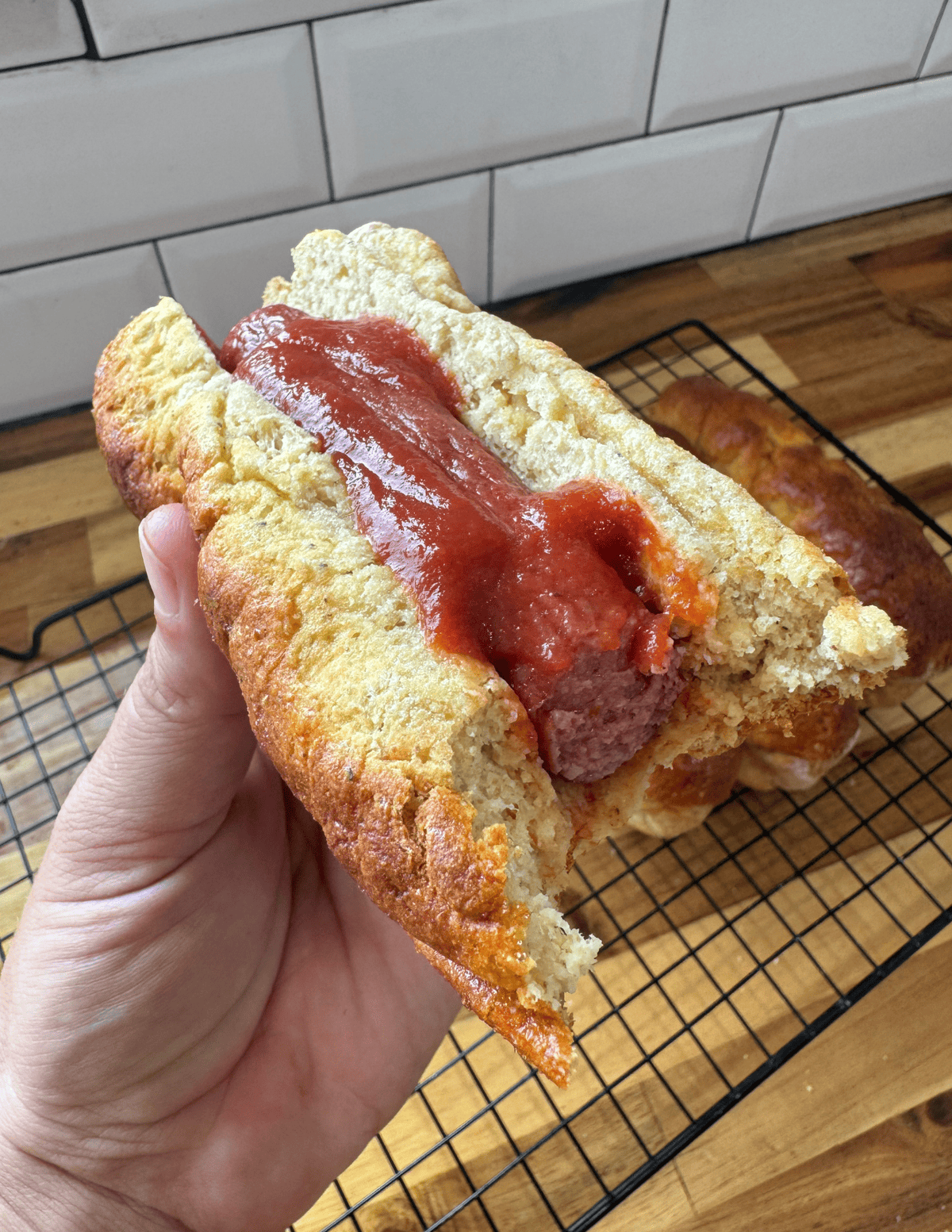
5. Lather a slice up with your favorite topping
6. Enjoy!
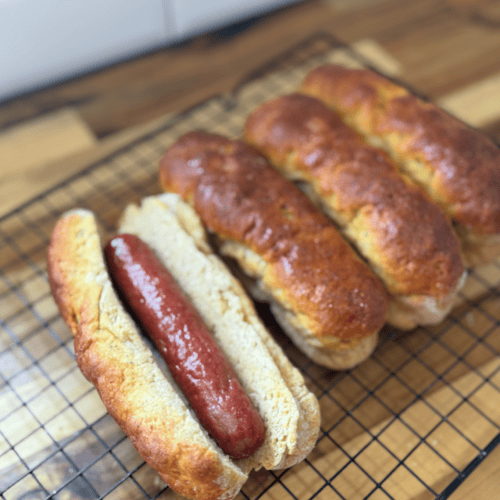
Soft and Fluffy Gluten Free Hotdog Buns
Ingredients
Pre-Prep Wet Ingredients
- 3 tsp Yeast
- 1/2 cup Warm Water
- 2 TBSP Honey
- 2 TBSP Psyllium Husk
- 1/3 cup Warm Water
Remaining Ingredients
- 1 cup Millet Flour
- 1/3 cup Sorghum Flour
- 1/3 cup Arrowroot Powder
- 4 tsp Baking Powder
- 1/2 TBSP Xanthan Gum
- 1 tsp Salt
- 1 Egg
Egg Wash
- 1 Egg
- 1 tbsp Water
Instructions
Prep the Yeast
- Mix yeast, honey, and ½ cup of warm water and proof.
Prep the Husk Gel
- Once proofed, mix psyllium husk and ⅓ cup of warm water to form a gel.
Make the Hotdog Buns
- Mix the dry ingredients first (everything but the egg, yeast and husk gel). Whisk together and then add the wet ingredients.
- Separate the dough into roughly 4 oz portions, roll into hot dog buns. Place in a hotdog pan and cover with a towel. Proof the dough for about 1 hour. It will be noticeably fluffy.
- Egg wash the tops of the buns and bake them for 20 minutes at 375°F degrees. Remove from heat, butter the tops and enjoy.
- Slice and store in the freezer in gallon sized bags. When ready to eat, re-heat in the oven at 350°F. for 10 minutes and then toast for 2-3 minut
Proofing Hacks/Tips
Make sure your yeast is fresh! Do not sip the proofing of the yeast step. Yeast that is not fresh will not get the rise you’re hoping for within your loaf and leave your bread more dense.
Use a proofing oven for the best results. The warmer the environment, the better your dough will proof. The sweet spot is 72-80°F. For this reason, in the winter, I will use my countertop oven (linked) on the proofing setting (100°F). If you do not have a proofing oven, set an oven to its lowest setting and turn it off to create a warmer space. You can also do this with your yeast to activate it before adding it to the other ingredients.
Heat the water between 90-100°F before mixing in sweetener to feed the yeast.
Proof the bread with a towel over it so that it will help trap in the heat and help maintain moisture within the bread.
Shape into smooth logs for even baking and don’t over-flour—this can dry out the dough
Prep/Storage Options:
- Pre–prep: The dry ingredients for the hotdog buns can be pre-mixed and stored in a sealed jar or glass container. I often triple or quadruple the recipe and pull it out when I’m ready to bake for the month. If using fresh milled grains, mix the dry ingredients together and store in the freezer in an air tight container to preserve nutriontal value of grains.
- Storage: Pre-slice and store on the countertop for 1-3 days (depending on how humid your air is. Store in the refrigerator in an airtight container or plastic bag for up to a week.
- Freezing: Pre-slice and store in the freezer (in airtight container or freezer bag) for up to 6 months.
Recipe FAQs
Get on the List
Subscribe to Receive the Gluten Free Pantry Must Haves Ebook

Did you make this recipe?
We’d love to see! Tag @farmfreshfamily on Instagram!